
Interview with Joan Kane, 2013
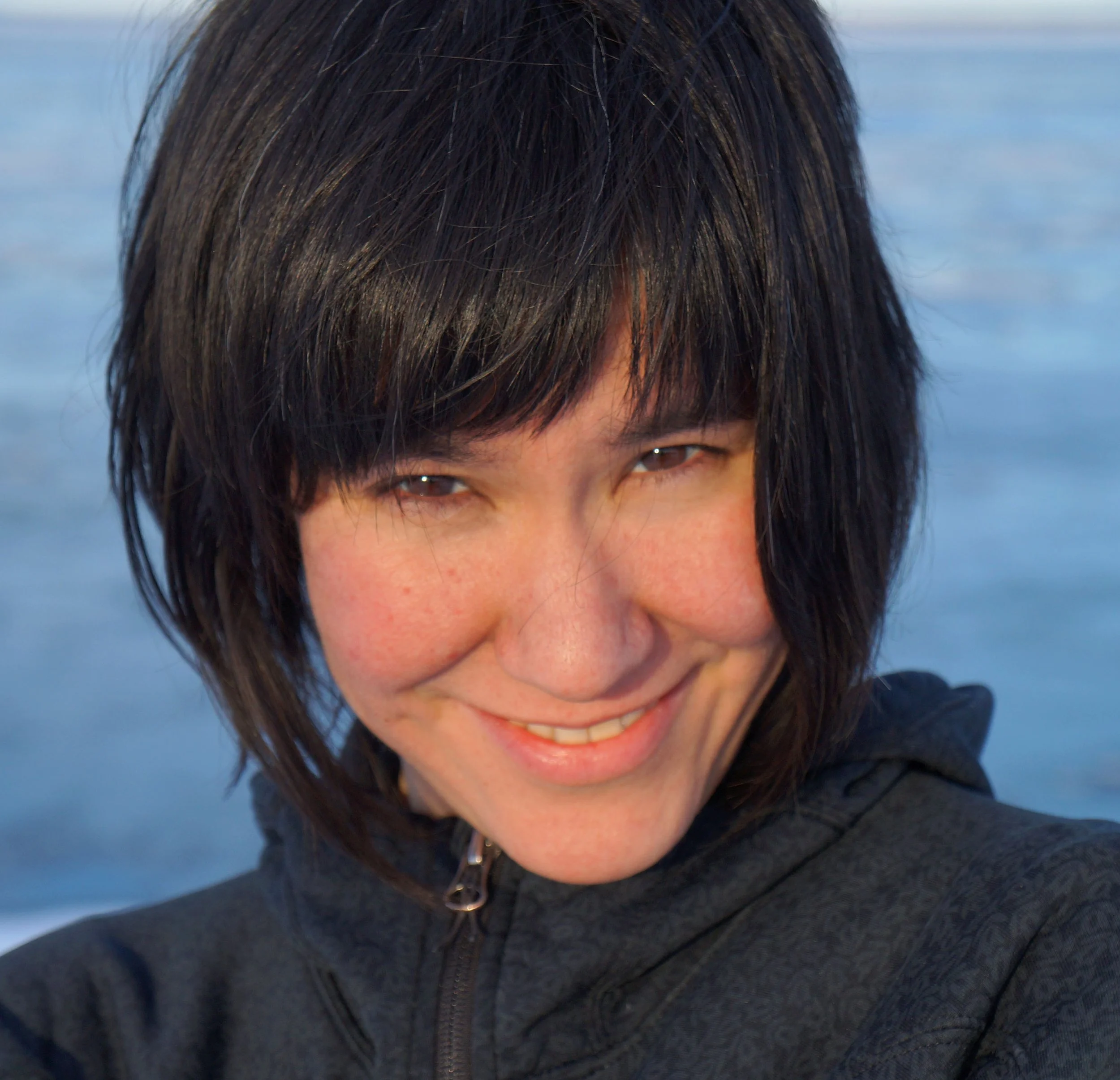
Joan Naviyuk Kane is Inupiaq with family from King Island and Mary's Igloo, Alaska. She earned her bachelor's degree from Harvard College and her MFA from Columbia University. Kane's awards include a 2007 individual artist award from the Rasmuson Foundation, a 2009 Connie Boochever Fellowship from the Alaska State Council on the Arts, a National Native Creative Development Program grant, and a Whiting Writers' Award for her first book, The Cormorant Hunter's Wife. She received the 2012 Donald Hall Prize for her second book, Hyperboreal. She was the recipient of the 2013 Native Arts and Cultures Foundation Literature Fellowship, the 2013 Creative Vision Award from United States Artists, a 2013 Rasmuson Fellowship, and was the 2014 Indigenous Writer in Residence at the School for Advanced Research and faculty for the MFA program at the Institute of American Indian Arts. Along with her sons, she lives in Anchorage, Alaska. She recently succeeded in crowdsourcing an important project, Ugiuvaŋmiuguruŋa, that will take her and others to her remote and now-uninhabited ancestral home for the first time.
JP: Your latest book includes your poem “Disappearer”, which begins with an epigraph by Lisa Stevenson that says “Disappearance, extinction, the inability to survive as a race—these are the anxieties of an Inuit modernity. They lie at the fuzzy border between cultural and biological extinction.” To what extent does that anxiety inform your work, your parenting, your desire to finally reach King Island for the first time?
JNK: I don’t know. We survive incredible trauma. Last year when you asked the same question I mentioned one death of a close family member. Since then many, many others have passed away, most due to utterly tragic circumstances. I don’t have a lot of interest in being flippant about the awful things this state, this country, and its dominant culture continue to perpetuate.
Jeremy: The world of your poems is a very physical and placed world. The sense of both real and imagined landscapes permeates your poems. How important is place to your identity and process?
JNK: I’m not sure. It’s not something I go out of my way to write about. I know non-Native writers rhapsodize and romanticize their place in the landscape, and impose upon the land the aspects of conquest and colonization that are inherent in Western values. I can scarcely stomach the artless Alaskana pseudo-reportage that is marketed and championed tirelessly. One well-known non-Native Alaskan writer read through my third manuscript last winter, and remarked something to the effect of, “you’ll be a much better writer when you don’t write about Eskimo things all the time anymore.” I don’t set out to write “Eskimo” or “nature” poems. Clearly place is important to my identity. My entire culture used to have a strong, highly adapted, and thriving identity before our access to land, language, and relationships was prohibited as a matter of policy. My process, then, I suppose, is a commentary on that. I don’t have much of a process. I maybe get an hour a month to write. I write when I can, what I can.
JP: How did your long stint away from Alaska in Boston and New York affect your identity and process as a poet, and how did coming home influence your work?
JNK: I had to get out of Alaska. I had the opportunity to accept a tremendous education, and a chance to learn from many people in many walks of life. This state is unquestionably hostile to Alaska Native people and our women in particular; the statistics are mind-boggling. In many ways, I don’t feel like I’ve come home at all. I’ve grown deeply disillusioned with the multiple failures of the university system, ANCSA, and the inability of both the public and private sector to contribute to sustainable economic and infrastructure development here. Our climate and by extension subsistence traditions are irrevocably changed. It would probably be nice to write revelatory, fanciful fiction or poetry or pensive memoirs about Alaska, but let’s face it: being here, and being in the middle of this shit storm has drained my creative potential, wasted a lot of my time, and eroded my optimism, once a huge motivator in both my professional life, and my writing. I am really disappointed in people I used to look up to. I’m disappointed in myself for not being able to do more to make a better place for my children, and regret being so naively hopeful about what I could do and how I could help. It doesn’t feel that there is much of a place for me here, or anywhere.
JP: How have other King Islanders and your Inupiaq community reacted to your work and your current efforts to reach King Island?
JNK: I don’t feel at liberty to discuss a lot of this publicly. I raised a lot of expectations about my trip to the island, and I can’t fulfill all of them. Most King Islanders wish me well. I have a lot of support from people who would like to see my generation engaged in healthy efforts like getting to know our land. However, I simply did not raise enough money to bring more than a handful of people, and I certainly don’t have the resources to bring the people I could learn the most from – it would be unsafe for me to jeopardize the health of elders whose well-being would be taxed by such an arduous trip to a place so inaccessible. Similarly, I can’t put children in harm’s way. I have enough to go with a small group that can help me assess the risk we would take by bringing children and elders with us.
JP: How does the recent Hyperboreal differ from your debut Cormorant Hunter’s Wife? When will your next book be released, and what directions will a trip to King Island take you and your writing?
JNK: They wield their difference in language, image, and form. Due to some hesitation on my part, I withdrew my third manuscript from consideration from several publishers. I had the chance to focus on it in January and February with a residency at the School for Advanced Research. I’d like to have the summer before I revisit it. I’m not sure what the King Island trip will result in as far as my writing is concerned. I hope, even if I don’t get to set foot on the island (which, after the Bering Sea crossing, is still a possibility), the trip will return some perspective and hope back to me.
JP: Can you comment on your forays into other genres, and perhaps about the particular way that poetry seems to be a home for you as a writer?
JNK: The poems have been hard to write. The plays have been harder. The novel is hardest.
A version of this interview originally appeared on the 49 Writers Blog on May 14, 2013 (when org still wore its original name, 49 Alaska Writing Center.) This version, published under the same backdate, is revised and abbreviated.
